The Benefits of 5G Technology for Smart Home Appliances: What Does the Future Hold?
The smart home revolution is rapidly evolving, transforming once-ordinary houses into interconnected ecosystems of intelligent devices. From voice-activated thermostats to AI-powered refrigerators, smart home appliances have already changed the way we live. But as impressive as these innovations are, a new technology is poised to supercharge their capabilities: 5G. The rollout of 5G networks promises to unlock unprecedented speed, reliability, and connectivity, setting the stage for a new era in home automation. But what exactly does 5G bring to the table for smart appliances, and how might our lives change as this technology becomes mainstream? Let’s explore the future that 5G is shaping for smart homes.
How 5G Transforms Smart Home Connectivity
Current smart home devices primarily rely on Wi-Fi or 4G LTE networks. While these have enabled the explosion of connected gadgets, they also come with limitations: congested bandwidth, slower response times, and the struggle to support dozens of devices simultaneously. Enter 5G, which offers a quantum leap in terms of speed, latency, and device capacity.
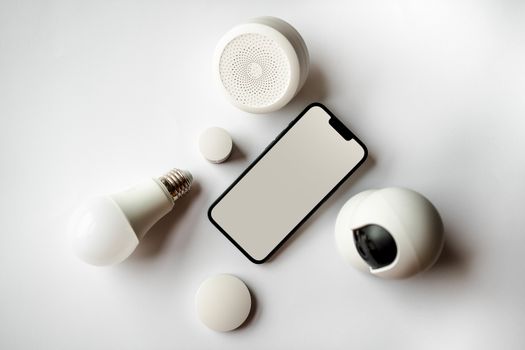
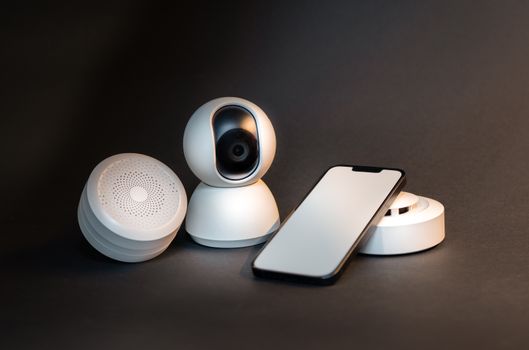
5G networks can deliver speeds up to 10 Gbps—up to 100 times faster than 4G LTE—while reducing latency to as low as 1 millisecond. This means that smart appliances can communicate with each other and with cloud services almost instantaneously. For example, a 5G-connected security camera can stream ultra-high-definition video in real-time with virtually no delay, while a smart oven can download and execute new recipes or software updates in seconds.
.png)
Moreover, 5G supports up to one million devices per square kilometer, compared to 4G’s 100,000. In a future smart home filled with dozens or even hundreds of connected sensors and gadgets, this capacity is a game-changer. It ensures that each device gets the bandwidth it needs, eliminating the slowdowns and connectivity issues that can plague Wi-Fi networks in crowded environments.
Enhanced Reliability and Security for Everyday Living
One of the biggest concerns with smart home technology is reliability—nobody wants their door lock or smoke detector to fail because of a poor connection. 5G networks are designed with reliability in mind, featuring advanced redundancy, network slicing, and ultra-reliable low-latency communication (URLLC).
For home security systems, this means faster and more dependable alerts. Imagine a scenario where a smart doorbell detects suspicious activity: with 5G, the system can instantly stream live video to your phone and alert local authorities, all in near real-time. Likewise, critical appliances like smart smoke detectors or water leak sensors can send immediate notifications, minimizing damage and potentially saving lives.
5G also introduces more robust security protocols at the network level. This is crucial as homes become increasingly connected; a 2022 report by Statista estimated that there were over 300 million smart home devices installed worldwide, with the number expected to soar past 1.2 billion by 2025. With so many potential entry points for hackers, enhanced security is essential. 5G’s improved encryption and authentication measures help protect sensitive household data and prevent unauthorized access to your smart appliances.
Smarter Automation and Artificial Intelligence Integration
The low latency and high bandwidth of 5G enable more sophisticated interactions between devices and cloud-based AI systems. Currently, many smart appliances rely on local processing or limited cloud capabilities due to network constraints. With 5G, these barriers fall away, allowing for seamless integration with advanced AI.
For instance, a smart refrigerator connected via 5G could continuously analyze its contents, cross-reference with your dietary preferences, and suggest healthy recipes—pulling real-time updates from the cloud. A 5G-enabled washing machine could automatically select the optimal wash cycle by accessing a database of fabric care instructions and current water or energy prices.
Furthermore, 5G allows for better device-to-device (D2D) communication. Imagine your smart alarm clock, upon waking you up, instantly signaling your coffee maker, thermostat, and lights to prepare your home for the day—without lag or miscommunication. The synergy between AI and 5G creates a more responsive and truly intelligent home environment, tailored to individual needs and contexts.
Energy Efficiency and Environmental Impact
Smart home appliances are often touted as eco-friendly, but their true potential for reducing energy consumption is often capped by network limitations. 5G helps change this equation by enabling real-time energy monitoring and smarter device coordination.
With 5G, smart appliances can receive instantaneous updates on grid conditions, electricity prices, and renewable energy availability. This allows them to optimize their operation: for example, a dishwasher might delay its cycle until off-peak hours, or a smart thermostat could adjust settings based on live weather and occupancy data. A study by the International Telecommunication Union found that smart energy management can reduce household electricity consumption by up to 30%—a figure that could rise as 5G-enabled devices become more prevalent.
The environmental benefits extend beyond the home. 5G’s network efficiency means less power is needed for data transmission, and its support for massive device connectivity helps cities and utilities deploy smart grids and sustainable infrastructure. As more homes adopt 5G-enabled appliances, the cumulative effect could be a substantial reduction in carbon emissions and resource use.
Comparing 5G to Previous Generations for Smart Homes
To appreciate the leap that 5G offers, it helps to see how it stacks up against earlier wireless standards. The following table highlights key differences:
| Feature | Wi-Fi (802.11ac) | 4G LTE | 5G |
|---|---|---|---|
| Maximum Speed | Up to 1.3 Gbps | Up to 1 Gbps | Up to 10 Gbps |
| Latency | ~10 ms | ~30-50 ms | ~1 ms |
| Device Capacity (per km²) | ~2,500 | ~100,000 | ~1,000,000 |
| Coverage Range | 100 meters (indoor) | Several kilometers | Several kilometers |
| Reliability | Medium | High | Ultra-high |
This comparison underscores why 5G is seen as a foundational technology for the future smart home. Its combination of speed, ultra-low latency, and massive device support simply outclasses earlier standards.
Challenges and Considerations for 5G-Connected Homes
While 5G unlocks exciting new possibilities, it also comes with challenges. The rollout of 5G infrastructure is ongoing, with global 5G connections passing the one billion mark in 2023, according to GSMA Intelligence, but full coverage—especially in rural areas—will take time. Homeowners may need to upgrade their routers and devices to take full advantage of 5G, as many current smart appliances are not yet compatible.
Privacy is another concern. With more devices connected and more data being generated and transmitted, ensuring that sensitive information remains protected is paramount. Consumers will need to pay attention to device security settings, network encryption, and software updates.
Finally, there’s the question of cost. While 5G-enabled devices are expected to become more affordable as adoption grows, early models may carry a premium. Still, as economies of scale kick in and manufacturers standardize on 5G, prices are likely to drop, making the technology accessible to the masses.
What the Future Holds for 5G and Smart Home Appliances
Looking ahead, the marriage of 5G and smart home appliances promises a future where our living spaces are not just automated, but intelligent, adaptive, and sustainable. By 2030, analysts predict that the global smart home market will exceed $313 billion, and 5G will be a key driver of this growth.
We can expect to see entirely new categories of appliances and services emerge. For example, home healthcare systems leveraging 5G could monitor vital signs in real-time and provide instant alerts to caregivers. Entertainment systems could offer immersive, multi-room VR experiences without lag. Even mundane tasks like grocery shopping could be transformed, as smart fridges communicate directly with online retailers to replenish supplies.
The smart home of tomorrow will not only make life more convenient but also safer, greener, and more responsive to our needs—all powered by the next generation of wireless connectivity.