.png)
Virtual Reality: The Next Frontier in Digital Learning
In today’s rapidly evolving educational landscape, technology continues to open new doors and break traditional barriers. Among the most groundbreaking developments is Virtual Reality (VR), a technology that immerses users in lifelike, interactive environments. Once the preserve of gamers and entertainment, VR is now fast emerging as a transformative force in digital learning. Schools, universities, and corporate training programs across the globe are turning to VR to create more engaging, effective, and accessible learning experiences. But what makes VR the next frontier in education, and how is it reshaping the way we learn? Let’s take a deep dive into this fascinating evolution.
Why Virtual Reality is Revolutionizing Education
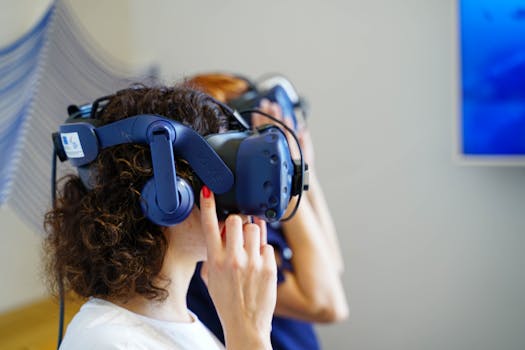
Virtual Reality brings a new dimension to digital learning, one that moves far beyond static slides or video lectures. With VR, learners don a headset and are transported into fully interactive simulations—be it a historical battlefield, a human cell, or the surface of Mars. This high level of immersion leads to increased engagement and improved knowledge retention.
A 2022 survey by PwC found that employees in VR-enabled training learned up to four times faster than in traditional classroom settings. Moreover, VR learners were 275% more confident to act on what they learned after training. These statistics underscore the potential for VR to not only accelerate learning but also to make it more memorable and impactful.
Beyond engagement, VR also democratizes access to experiences that were once limited by geography, resources, or safety concerns. For example, medical students can practice surgeries in a risk-free environment, and engineering students can experiment with complex machinery without the need for expensive equipment.
Immersive Learning: How VR Enhances Understanding
Traditional learning methods often struggle to make abstract or complex concepts tangible. VR, however, excels at bringing these ideas to life. Imagine a biology class where students can shrink down to the size of a blood cell and navigate the human circulatory system, observing firsthand how blood flows and oxygen is delivered throughout the body.
This level of experiential learning is supported by research. A study published in the journal $1 found that students who used VR to explore molecular structures scored 32% higher on comprehension tests compared to those who used textbooks alone.
Examples of immersive VR learning experiences include:
- Virtual science labs, where chemistry students safely conduct experiments that would be hazardous or costly in real life. - History lessons that allow students to "walk through" ancient civilizations, fostering empathy and a deeper contextual understanding. - Language learning environments where users interact with native speakers in simulated marketplaces or social settings.By engaging multiple senses and promoting active participation, VR helps learners bridge the gap between theory and practice.
Accessibility and Inclusivity: Bridging Educational Gaps
One of VR’s most promising aspects is its ability to make education more inclusive. For students with physical disabilities or those living in remote areas, VR can provide access to experiences and resources that might otherwise be out of reach. In 2023, UNICEF partnered with several VR companies to pilot immersive learning programs in rural Africa, delivering science and math content to schools without lab facilities.
VR is also being used to address learning differences. For example, children with autism can use VR-based social skills training to practice real-world interactions in a controlled, stress-free environment. According to a 2021 report by the Autism Research Institute, such programs resulted in a 25% improvement in social engagement among participants.
Moreover, VR content can be tailored to multiple languages and learning styles, from visual and auditory to kinesthetic, offering a more personalized approach than most traditional platforms.
Cost, Scalability, and Accessibility: A Comparative Overview
While the benefits of VR in education are substantial, questions remain about cost and scalability. VR hardware and software can represent a significant investment, particularly for underfunded schools. However, the rapid evolution of technology is already driving prices down, and cloud-based VR platforms are making implementation more affordable.
The table below compares traditional learning, e-learning, and VR-based learning across several key factors:
| Factor | Traditional Learning | E-Learning | VR-Based Learning |
|---|---|---|---|
| Initial Setup Cost | Low to Medium | Low | Medium to High (declining) |
| Student Engagement | Medium | Low to Medium | High |
| Knowledge Retention | 60-70% | 50-60% | 75-90% |
| Accessibility | Geographically limited | Global (with internet) | Global (with hardware) |
| Scalability | Limited by class size | High | High (after setup) |
| Personalization | Low | Medium | High |
As the table shows, VR-based learning excels in engagement, retention, and personalization, while initial setup costs are becoming more manageable as technology advances.
Real-World Applications: VR in Action
Across the globe, institutions are harnessing VR for a diverse range of subjects. Here are a few notable examples:
- $1 Students use VR to experience different perspectives, such as experiencing life as a refugee or seeing the world through the eyes of someone with a disability, fostering empathy and social awareness. - $1 Walmart has trained over 1 million employees with VR modules that simulate customer interactions, emergency situations, and new technology rollouts. According to Walmart, this led to a 10-15% improvement in test scores and a 30% faster training completion rate compared to traditional methods. - $1 VR simulations allow aspiring surgeons to practice complex procedures in a risk-free environment. According to the American Board of Internal Medicine, VR-trained surgeons are 29% faster and make six times fewer errors than those trained with conventional methods.These successes demonstrate that VR is not just a novelty but a practical, effective tool for education and professional training.
Challenges and the Road Ahead
Despite its promise, VR in education faces several challenges. The most significant include:
- $1 While prices for VR headsets have dropped from an average of $799 in 2016 to around $300 in 2024, this still represents a barrier for some institutions. - $1 Creating high-quality, curriculum-aligned VR content requires technical expertise and investment. However, open-source tools and content marketplaces are beginning to address these gaps. - $1 Some users experience motion sickness or eye strain during extended VR sessions. Ongoing research aims to minimize these effects through better hardware design and optimized content. - $1 Successful implementation depends on teachers being equipped to use and manage VR tools effectively. Professional development programs and support networks are essential.Looking ahead, the integration of AI and cloud computing with VR promises even more personalized, adaptive learning experiences. As 5G networks expand, streaming high-fidelity VR content will become feasible even in bandwidth-limited settings, further democratizing access.
Conclusion: Virtual Reality’s Transformative Potential
Virtual Reality is no longer a futuristic concept; it is rapidly becoming an integral part of digital learning. By making education more immersive, engaging, and accessible, VR promises to bridge gaps and unlock new opportunities for learners of all ages and backgrounds. While challenges remain, continued innovation and investment are bringing this vision within reach. As schools, universities, and businesses embrace VR, the next decade could see a dramatic shift in how knowledge is shared, skills are developed, and minds are inspired. The frontier of digital learning is here—and it is virtual.