The world of smart homes is evolving rapidly, and at the heart of this transformation lies 5G technology. While previous advances in wireless communication have enabled households to connect more devices and enjoy faster internet, 5G is set to revolutionize how our homes operate, communicate, and adapt to our lifestyles. This article explores innovative approaches to using 5G technologies in smart home applications, moving beyond simple connectivity into realms that redefine security, energy efficiency, healthcare, and immersive experiences.
How 5G is Redefining Smart Home Connectivity
Unlike its predecessors, 5G delivers lightning-fast speeds (up to 10 Gbps), ultra-low latency (as low as 1 millisecond), and the ability to connect up to 1 million devices per square kilometer. These features unlock a new era for smart homes, enabling complex applications that were previously impossible with 4G or Wi-Fi alone.
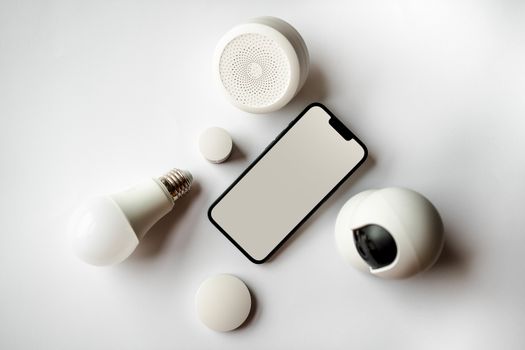
One of the most significant shifts is the move from hub-based smart home systems to decentralized, device-to-device communications. With 5G, each device can communicate directly with others and the cloud, eliminating bottlenecks and enhancing reliability. For example, a smart refrigerator can instantly share inventory data with both your smartphone and your local grocery store, triggering automated shopping lists or even direct ordering, all in real time.
.png)
Moreover, 5G’s enhanced capacity means homes can support a far greater number of smart devices, from thermostats and cameras to gardening robots and leak detectors, without bandwidth struggles or lag. This scalability is crucial as the average smart home now contains over 20 connected devices, a number expected to surpass 50 by 2025 according to Statista.
Revolutionizing Security: Real-Time Monitoring and AI Integration
Home security is poised for a dramatic upgrade thanks to 5G. Traditional systems, often plagued by lag and limited by bandwidth, are giving way to always-on, AI-powered security suites.
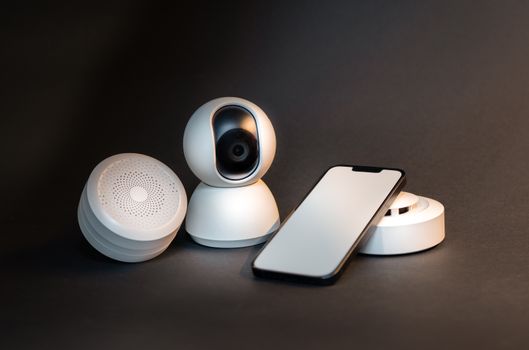
With 5G’s ultra-low latency, smart cameras can stream 4K or even 8K footage in real time to your mobile device, no matter where you are in the world. Facial recognition algorithms process data instantly, alerting homeowners to unfamiliar visitors or suspicious behavior within seconds. Some systems now integrate with city-wide security networks, sharing encrypted data to assist local authorities in emergencies.
For example, in 2023, a pilot program in Tokyo used 5G-enabled smart home cameras to help reduce neighborhood break-ins by 35%. The system instantly flagged unusual activity, sent alerts to homeowners, and, with permission, shared critical data with local police, leading to faster response times and increased deterrence.
5G also enables seamless integration with biometric locks, motion sensors, and environmental monitors. If smoke or gas is detected, the system can not only alert homeowners but also communicate directly with emergency services, providing exact coordinates and live video feeds for rapid assistance.
Smart Energy Management: 5G and the Rise of Intelligent Grids
Energy efficiency is a top priority for both homeowners and environmental advocates. 5G paves the way for smart energy management systems that adapt in real time to changing conditions and user preferences.
Smart meters equipped with 5G can communicate with utility providers and home appliances simultaneously, balancing energy loads, reducing peak usage, and lowering costs. For example, a washing machine might delay its cycle until solar panels produce surplus energy, all coordinated by AI algorithms running in the cloud.
The city of Barcelona launched a 5G-enabled smart grid pilot in 2022, which reduced residential energy consumption by 18% while maintaining comfort. Homes in this network used real-time data to optimize heating, cooling, lighting, and appliance use, responding dynamically to energy prices and weather conditions.
The following table compares traditional and 5G-enabled smart home energy management systems:
| Feature | Traditional System | 5G-Enabled System |
|---|---|---|
| Data Transmission Speed | Seconds to minutes | Milliseconds |
| Device Connectivity Limit | 10-15 devices | 50+ devices |
| Real-Time Energy Optimization | Limited | Advanced, AI-driven |
| Grid Integration | Manual/Periodic | Continuous, automated |
| Energy Savings | 5-10% | 15-25% |
Healthcare at Home: 5G and Remote Monitoring
Healthcare is moving into the home thanks to 5G’s reliability and speed. Remote monitoring devices, such as blood pressure cuffs, glucose meters, and even wearable ECGs, now transmit high-resolution, real-time data directly to healthcare providers.
For elderly residents or those with chronic conditions, 5G-enabled sensors can continuously track vital signs and send instant alerts if anomalies are detected. In a 2023 study conducted in Sweden, 5G-powered remote health monitoring reduced non-emergency hospital visits by 27% for participating seniors.
Telemedicine platforms also benefit, allowing doctors to conduct high-definition video consultations, review patient data in real time, and even guide connected diagnostic tools remotely. 5G’s low latency ensures that these interactions are as seamless as in-person visits, improving access and outcomes, especially in rural or underserved regions.
Immersive Experiences: 5G, AR, and Smart Entertainment
Beyond practical management and security, 5G is transforming home entertainment through augmented reality (AR), virtual reality (VR), and ultra-high-definition streaming.
Imagine walking into your living room, where interactive AR projections overlay your environment, providing real-time news, weather, or even immersive educational content for your children—all powered by 5G’s robust bandwidth. Companies like Samsung and LG are already experimenting with 5G-powered AR smart mirrors and windows, which can turn any surface into an interactive display.
For gaming enthusiasts, 5G enables cloud-based gaming with near-zero lag. In 2024, the global market for cloud gaming is estimated to reach $8.2 billion, driven largely by the adoption of 5G in homes. Gamers can access top-tier experiences without expensive consoles, as all processing occurs in the cloud and streams seamlessly to any device.
Ultra-high-definition streaming is another area of growth. With 5G, households can stream multiple 8K videos simultaneously, supporting family members with diverse viewing preferences without buffering or quality drops.
Building the Future: Challenges and Opportunities for 5G Smart Homes
While the promise of 5G in smart home applications is vast, it also brings challenges. The initial cost of 5G-enabled devices is higher than their Wi-Fi or 4G counterparts, and some regions may lack consistent 5G coverage, particularly in rural or remote areas.
Security is another concern. With more devices connected at higher speeds, the attack surface for potential hackers increases. Homeowners must invest in robust cybersecurity measures, including encrypted communications and regular software updates.
On the other hand, the opportunities are immense. As 5G networks expand—global 5G subscriptions are expected to exceed 1.9 billion by 2025 according to Ericsson—the cost of devices will fall, and coverage will improve. This democratization will enable more households to benefit from advanced automation, energy savings, improved security, and better healthcare at home.
Forward-thinking companies are already developing interoperable ecosystems, where devices from different brands work together seamlessly via 5G. Open standards and cross-industry collaborations will drive the next wave of smart home innovation.
5G in Smart Homes: Looking Ahead
The integration of 5G technologies marks a turning point in the evolution of smart homes. From decentralized device communication and advanced security to energy optimization, remote healthcare, and immersive entertainment, 5G is the backbone for a more intelligent, responsive, and personalized living environment.
As the technology matures and becomes more accessible, we can expect even more groundbreaking applications—think robotic chefs, real-time language translation throughout the home, and predictive maintenance for every appliance. The smart home of the future will be defined by its adaptability, efficiency, and ability to anticipate the needs of its inhabitants, all powered by the invisible but essential infrastructure of 5G.